Product Growth Strategy for a Student Housing Marketplace
Turning competitor research and two-sided user outreach into a clear how-we-win strategy and a prioritized product and growth roadmap for a trust-led, campus-first marketplace.
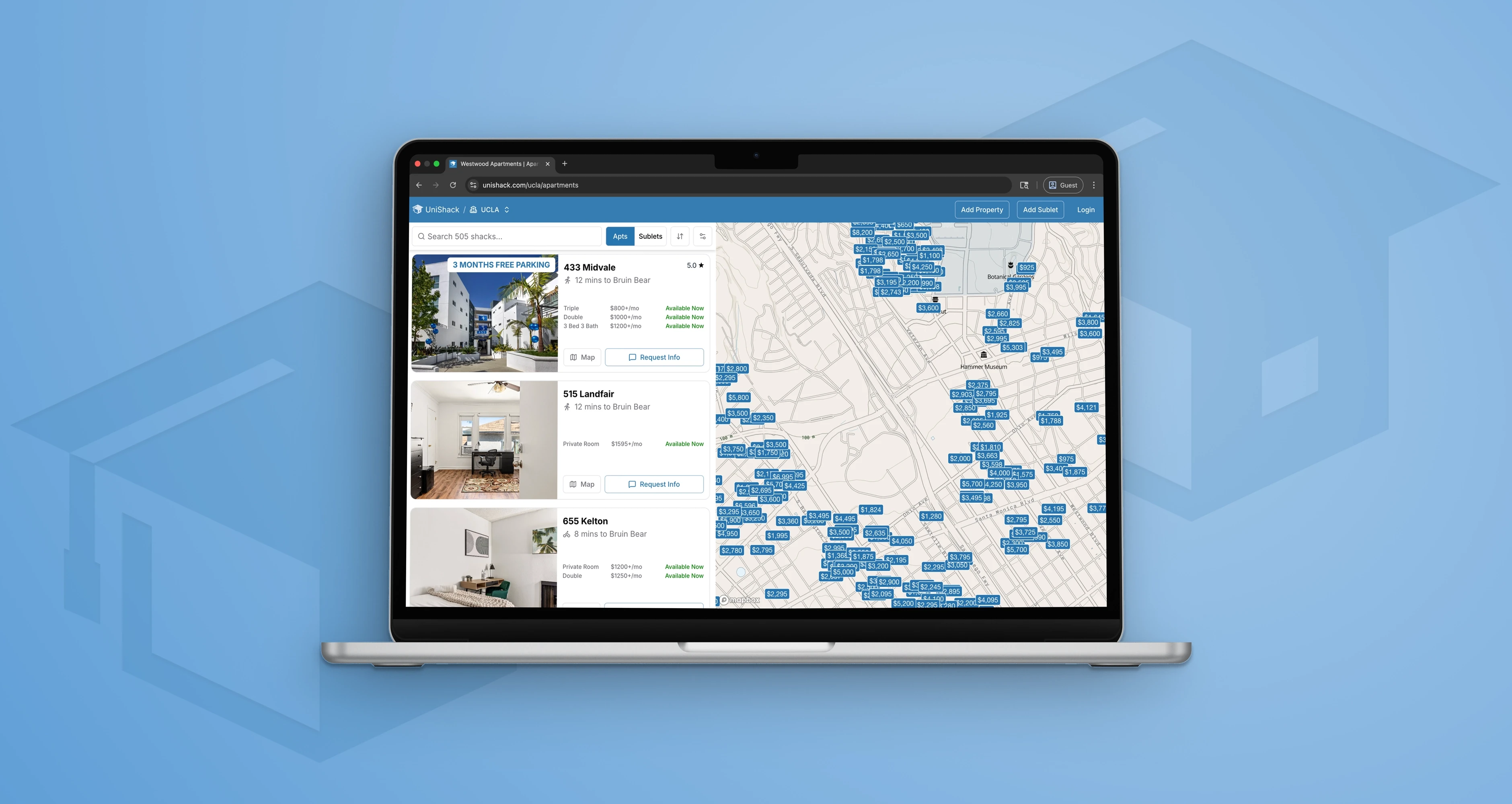
A trust-led strategy for a two-sided student housing marketplace
UniShack is a two-sided student housing marketplace operating across 15 campuses with hundreds of active property managers. I identified that supply-side drop-off (property managers not completing listings) was the binding constraint on student activation, reframed the strategy from student acquisition to partner channel enablement, and built a scoring model in Google Sheets that shifted the founder from broad SEO to a trust-first supply strategy. I turned competitor research, two-sided outreach, and 340+ AI-assisted insights into a clear how-we-win strategy and a prioritized product and growth roadmap.
The market is crowded, the trust is broken
UniShack is a two-sided marketplace. Students need trustworthy housing options. Property managers need qualified student leads. The core risk is scams and low trust, so growth depends on verified supply and clear trust signals. Competitors can win on traffic, but traffic does not equal trust. Students hesitate to act because they do not trust listing quality, and property managers do not finish listings because the value is not clear. This reduces verified supply and slows lead volume.
"Traffic doesn't equal trust. For a two-sided marketplace, trust is what compounds."
Two sides of a marketplace with a shared trust problem
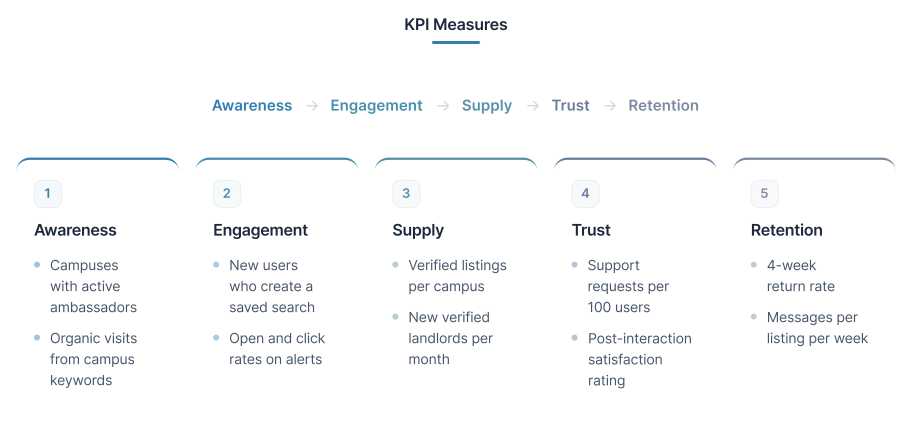
What we measure to know it's working
Metrics were structured across three tiers to connect daily actions to the north star outcome.
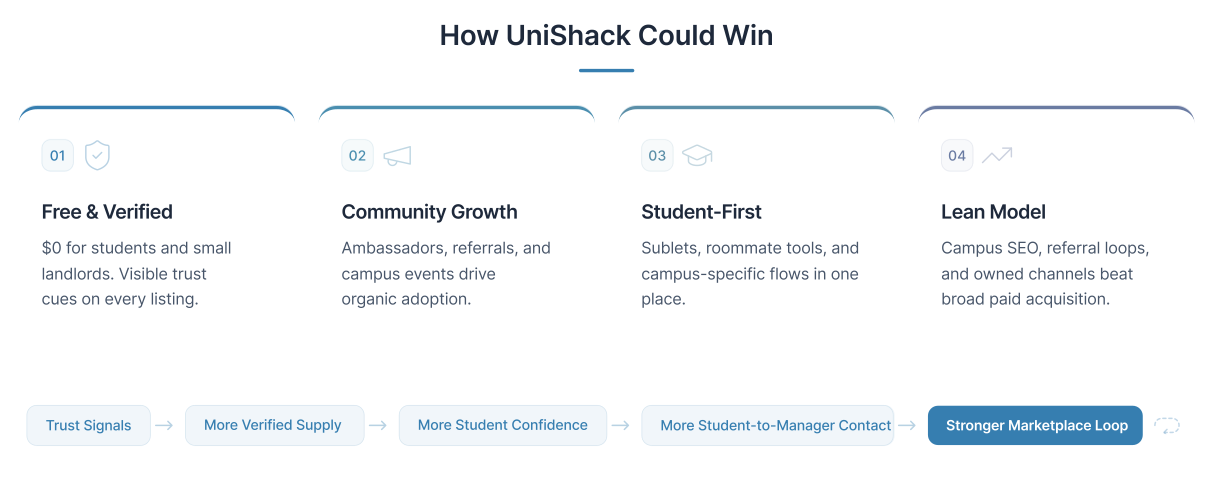
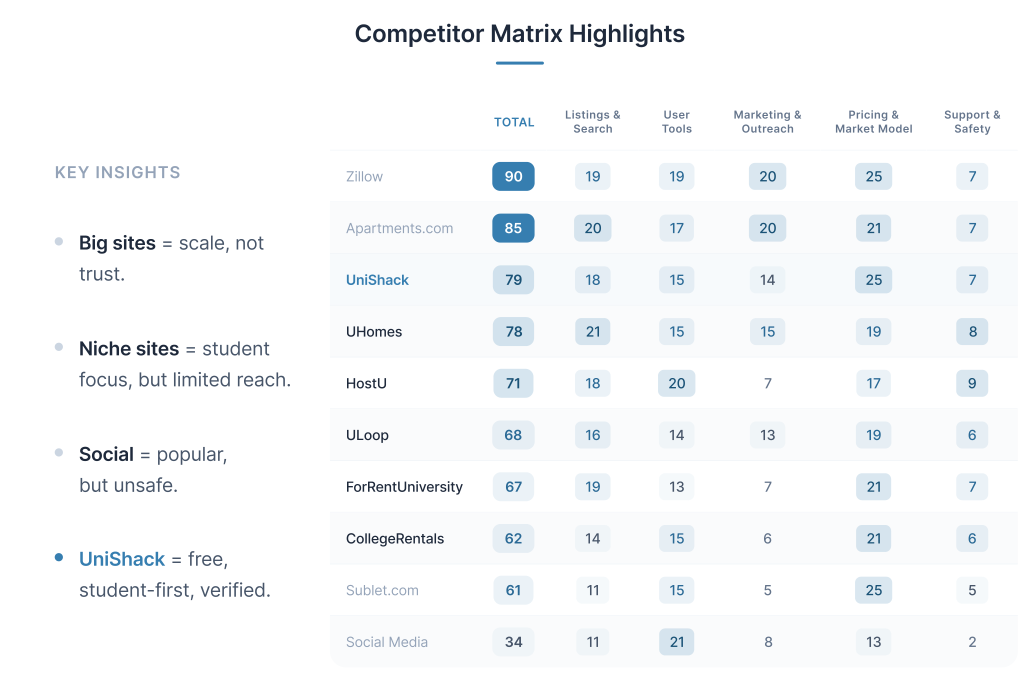
Big platforms win on traffic. UniShack wins on trust.
Competitor testing, review mining, and outreach interviews revealed a consistent pattern: students don't distrust UniShack, they just don't have enough proof yet.
UniShack cannot out-rank the big marketplaces today, so pure SEO and paid acquisition won't work. The fastest path is to out-trust them: make verification obvious, build local campus credibility, and add features that keep students coming back.
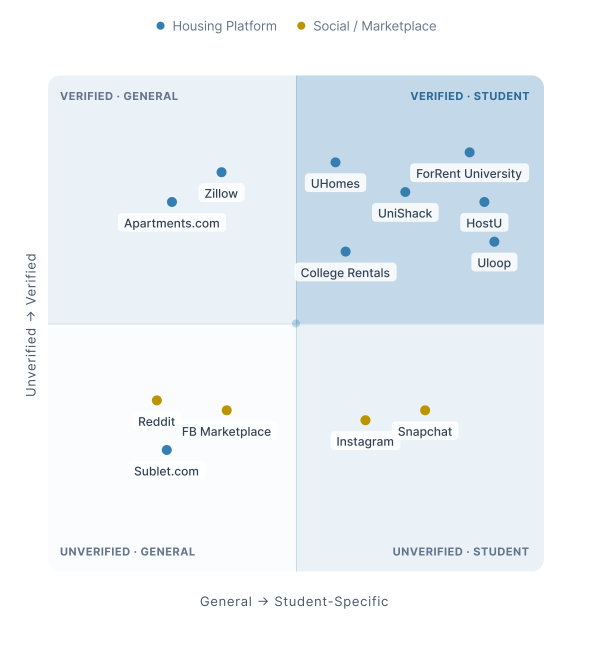
Big platforms win on traffic, but they do not win on student trust or student-first workflows
Social platforms pull attention, but they stay unsafe and unverified
UniShack's edge is free, verified, and campus-first, but it needs stronger trust cues and local growth loops
Students hesitate to contact landlords when listings lack visible verification signals
Property managers drop off during listing setup when the benefit isn't immediately clear
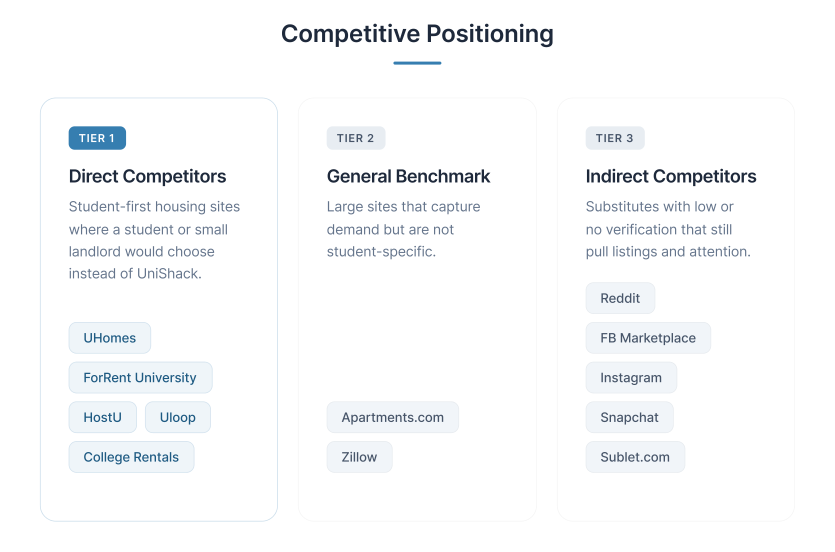
Out-trust instead of out-rank
Rather than chasing SEO rankings or paid acquisition, the strategy centered on what UniShack could actually win: local trust loops, visible verification, and campus-first community growth.
Make trust visible on every listing
Build campus-by-campus, not nationwide
Use community trust loops before paid growth
Add stickiness so users return while supply grows
Prove value fast for both sides of the marketplace
If we launch ambassadors and a 'How we verify' page, then verified listings rise because students and landlords see proof and peer trust.
If we add saved search alerts and reviews, then return rate rises because we create repeat reasons to come back.
If we add roommate matching, then we widen the job-to-be-done and increase retention.
The founder wanted SEO. The data said trust-first.
The initial direction was to invest in broad SEO to close the traffic gap with bigger platforms. I built a scoring model in Google Sheets comparing SEO timeline (6 to 12 months to meaningful rank movement) against a trust-first supply strategy (weeks to first verified listing signal). The model shifted the roadmap.
Shift the roadmap to trust-first supply strategy. SEO was deferred, not rejected, with a note to revisit at 5x current traffic. The scoring model gave the founder a clear rationale for the sequence: earn the trust advantage first, then scale reach once the supply side was healthy.
0 to 180 day plan: trust, stickiness, demand
Each phase builds on the last. Trust must come first, because stickiness and demand only compound once the foundation is solid.
Discovery: competitor testing, review mining, funnel mapping
Spec and alignment: scoring system, SWOT, positioning, 'how we win'
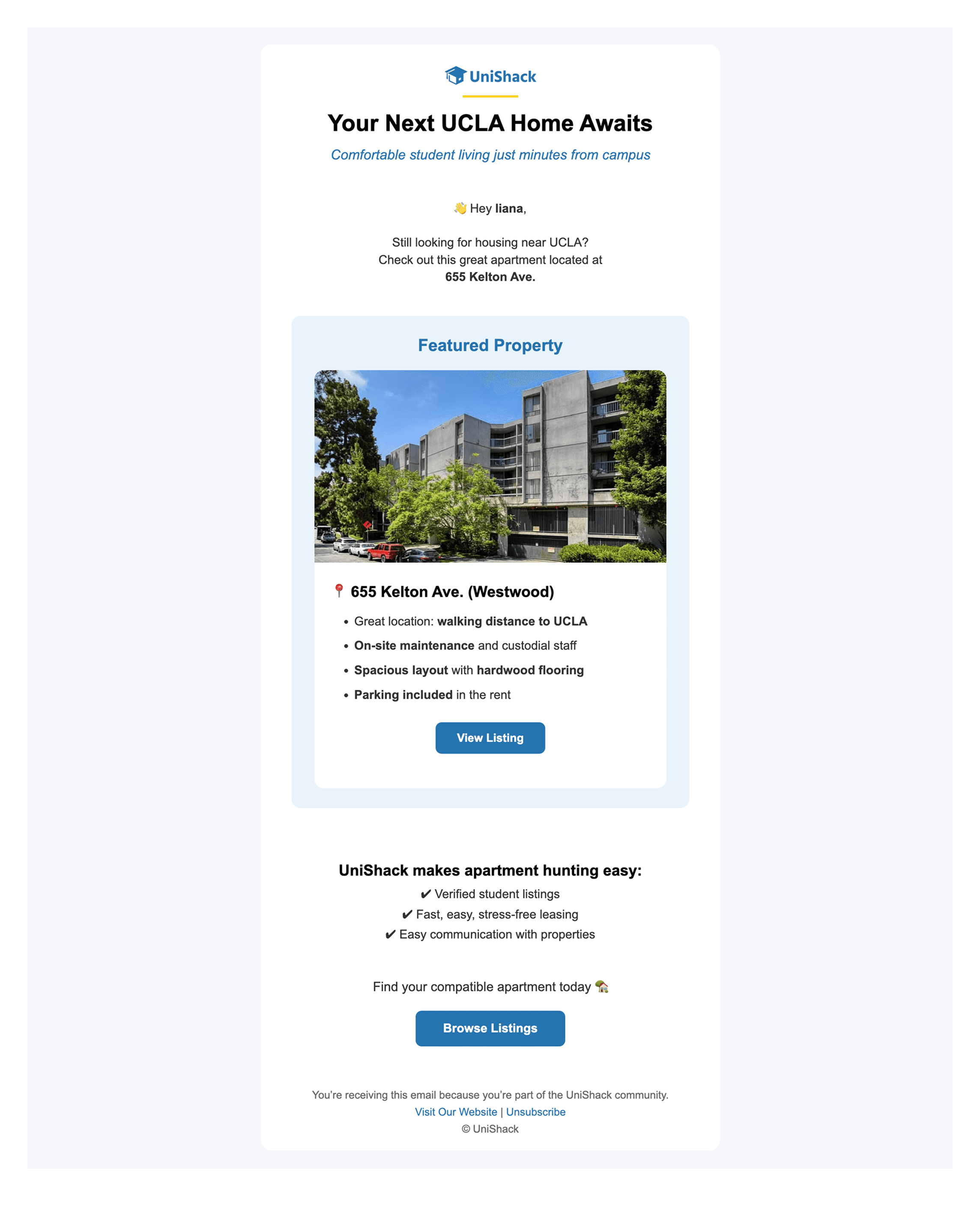
Pilots: Instagram and email messaging tests
Roadmap: 0–30, 30–90, 90–180 execution plan
Three research methods that shaped every recommendation
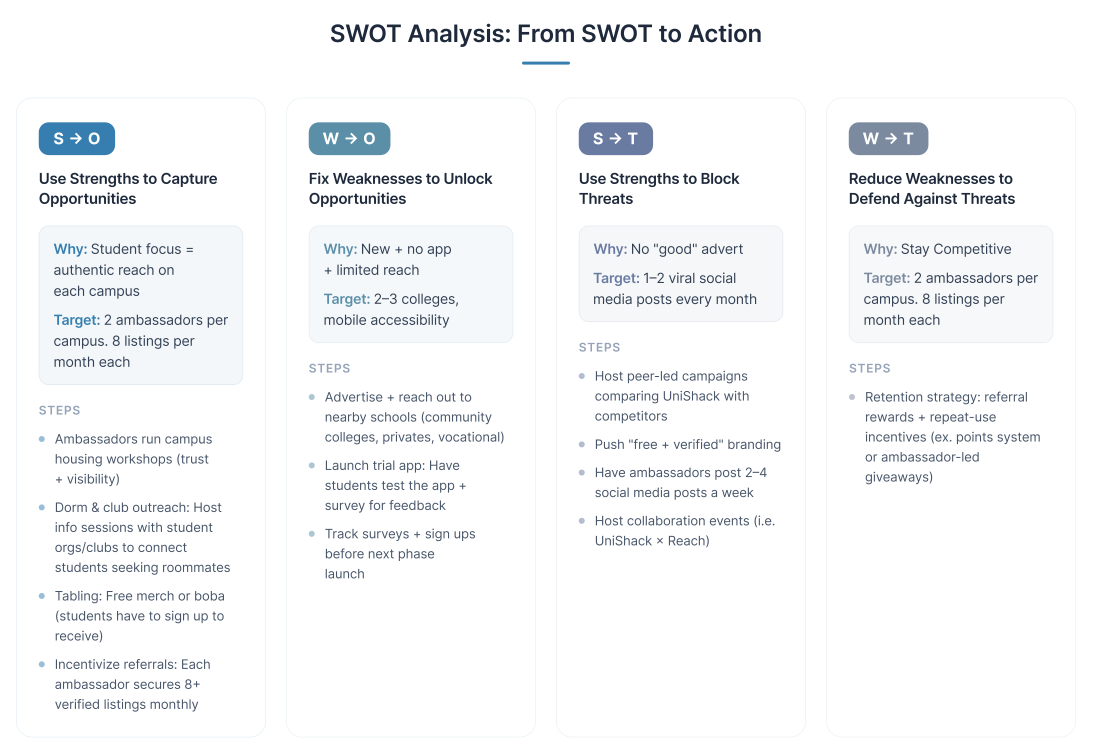
Each method answered a different question. The competitor matrix showed the market, outreach showed the users, and the pilots tested the message.
What I handed off and how it rolls out
The handoff was built for a small team. Everything was concrete, sequenced, and tied to a metric.
Competitor matrix and positioning map (general to student-specific, unverified to verified)
'How we win' pillars: free, verified, student-first, community growth, lean model
KPI ladder: awareness, engagement, supply, trust, retention
Next-step backlog with concrete feature bets (alerts, reviews, roommate matching, landlord intake)
Weekly share-outs to align on targets, learnings, and the next experiment queue.
Ambassadors, verification page, trust badges, reviews, and early alerts
Roommate matching, campus guides, saved-search alerts via email and SMS
One-page landlord intake with incentives, referral loops, light monetization tests
Track trust signals and support load as growth increases. Keep verification standards high to avoid supply growth that harms trust.
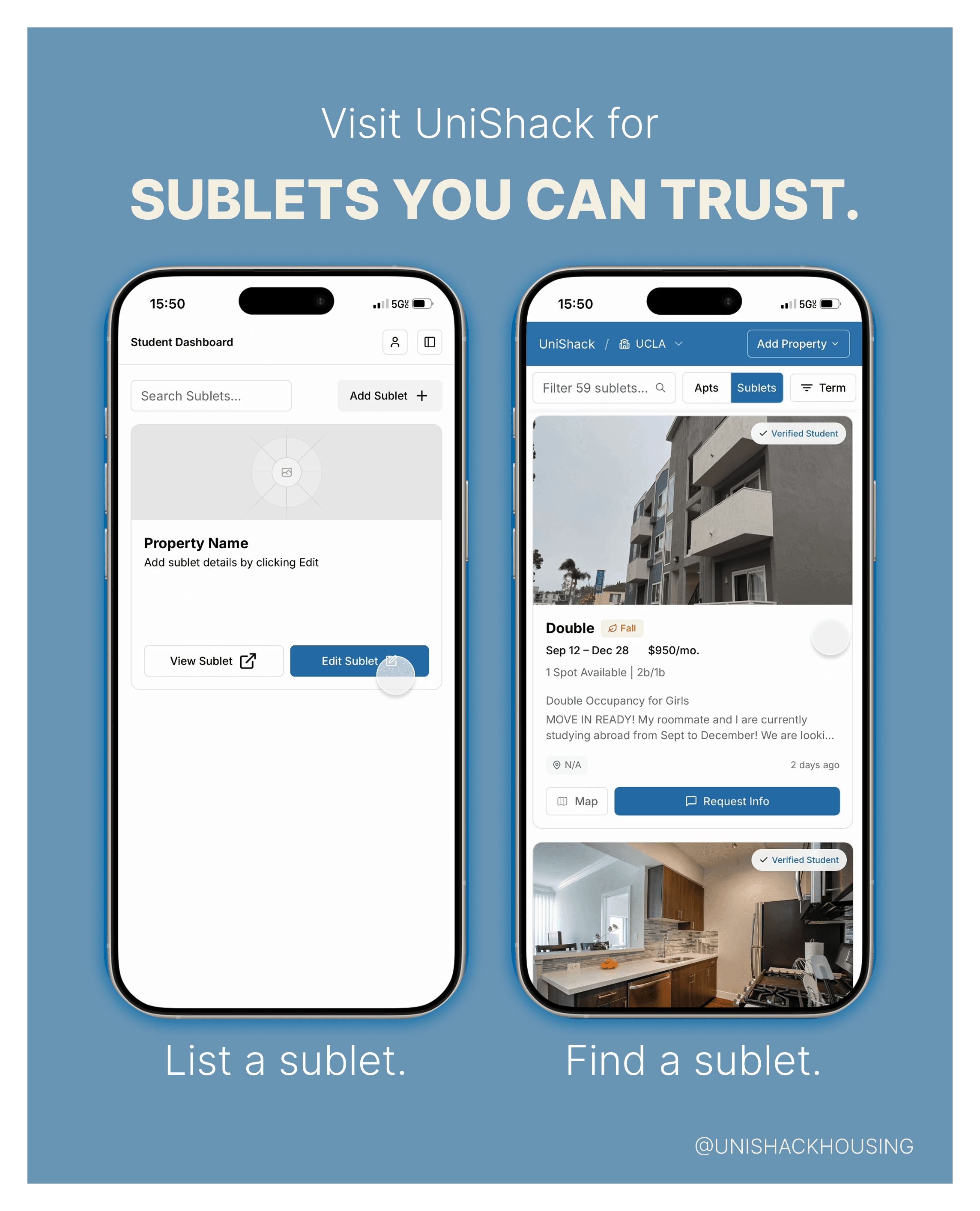
Early pilots showed both sides of the marketplace responding
Trust-first messaging pilots shipped to the property manager acquisition channel. At UniShack's scale across 15 campuses, a 2.4pp contact-rate improvement compounds into hundreds of additional qualified landlord connections per housing cycle.
Fast drafts beat perfect answers in a startup
I learned to balance depth with speed. In a startup, a strong draft now often beats a perfect answer later. The competitor matrix went through four versions in two weeks, each more useful than the last because it got in front of the founder early and invited real pushback. The biggest strategic learning: I'd start benchmarking earlier and lock in the metric tracking plan before running campaigns, so every pilot produces clean signal. During this engagement, downstream conversion to paid plans was outside the measurement window. I recommended adding funnel events to the analytics setup as a documented next step.
When you can't out-rank, you out-trust. Trust compounds faster than traffic.
More Case Studies
Let's connect and build something together.
Open to product, GTM, operations, and design opportunities.