Campus Go-to-Market Strategy for a Proximity-Based Social App
Building a UCLA-specific go-to-market plan for a proximity-based social app, from positioning and personas to event tactics, budget, a CAC model, and a full measurement framework.
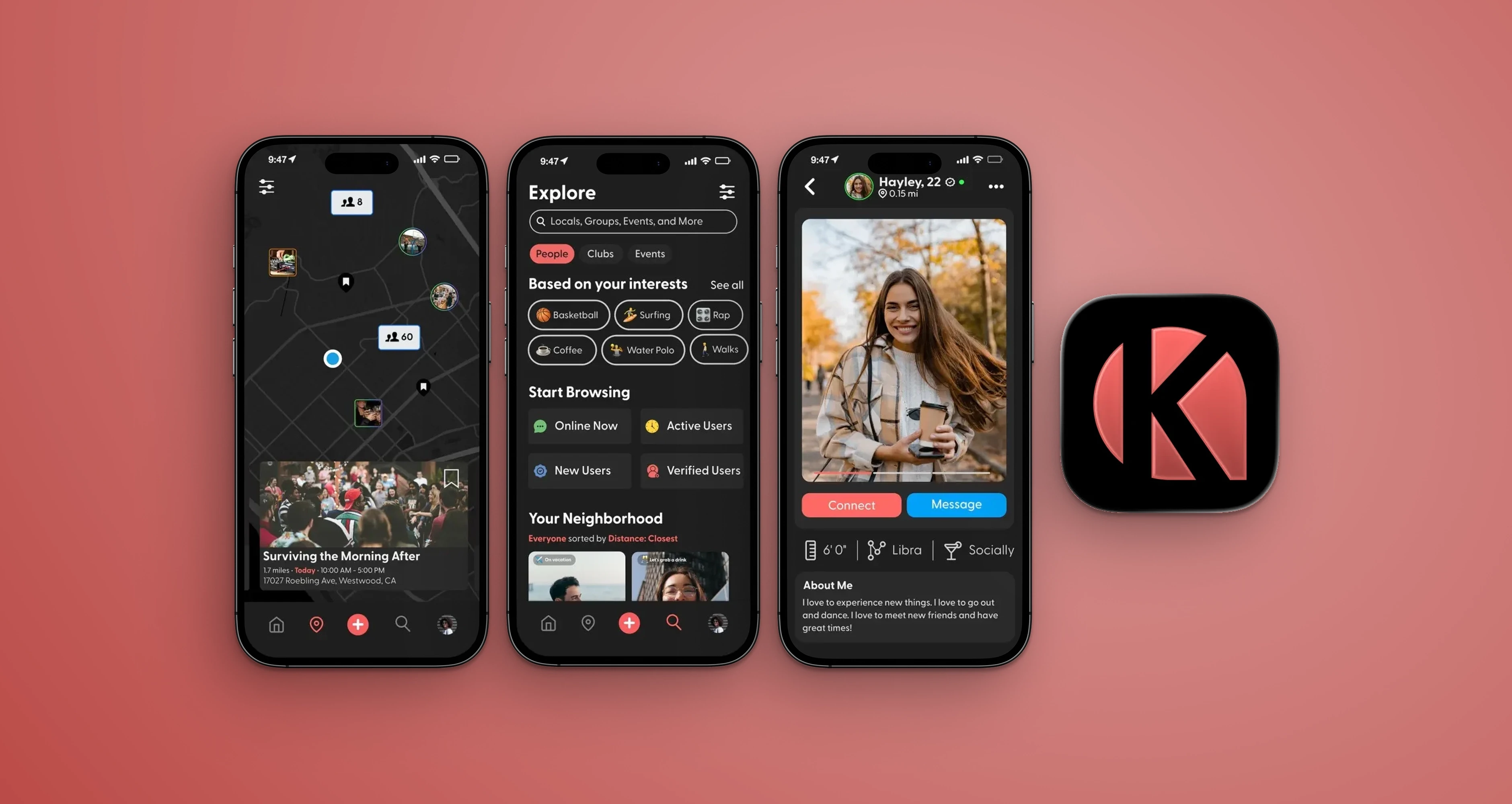
A campus-first GTM strategy for a proximity-based social app
Kardder is a location-based social networking app that helps people connect with others nearby and discover local events. It uses proximity features like Bluetooth device recognition, a local event timeline, a map of events, and a 'down-to-meet' toggle that helps users signal intent. The business goal was to grow adoption on a college campus, starting with UCLA. I built the UCLA go-to-market plan, including a CAC model that compared paid social ($4-6/install) against campus activations (~$1.37/install), and moved the founding team from a split decision to an activation-first strategy with paid as a retargeting layer.
Students didn't understand what Kardder was, and the product story didn't land fast enough
Students had many options for social apps, and Kardder lacked steady social proof and consistent top-of-funnel visibility, which limited installs and on-campus adoption. Kardder had an early UCLA user base, but the product story did not land fast enough for students. Competitor pages communicated their 'why' more clearly, and that gap showed up in downloads and social followings. Separately, the team wanted to avoid the 'this is a dating app' misconception and instead lead with real-time social connection and missed connections.
"Increase awareness and installs at UCLA by tightening positioning and building a clear growth plan the team could run and measure."
What I built
Launch strategy (UCLA-specific)
Target market and personas
Positioning statement and messaging frame
Channel tactics and flowcharts
CAC model comparing paid social vs. campus activations
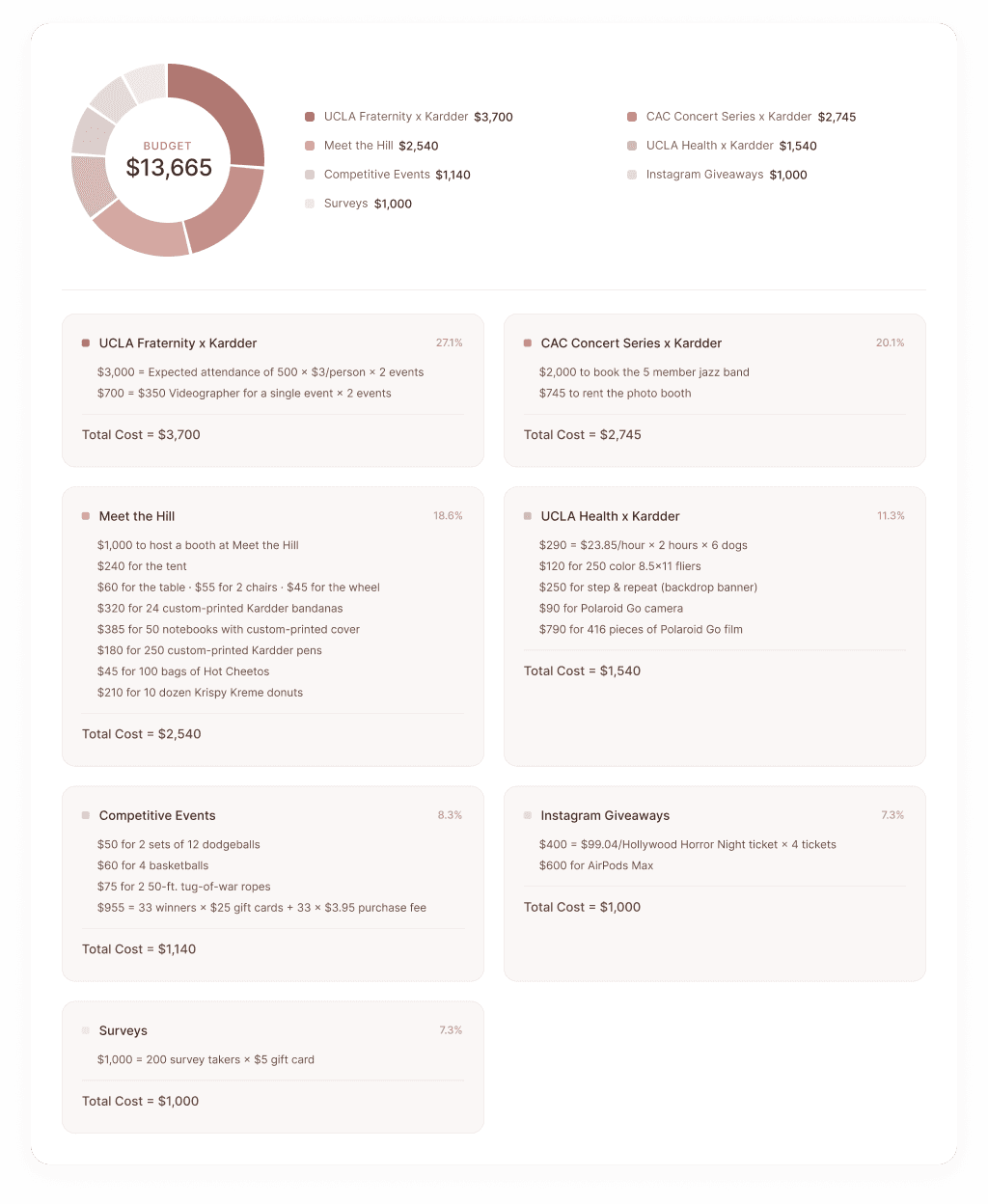
Budget breakdown (event and creator spend)
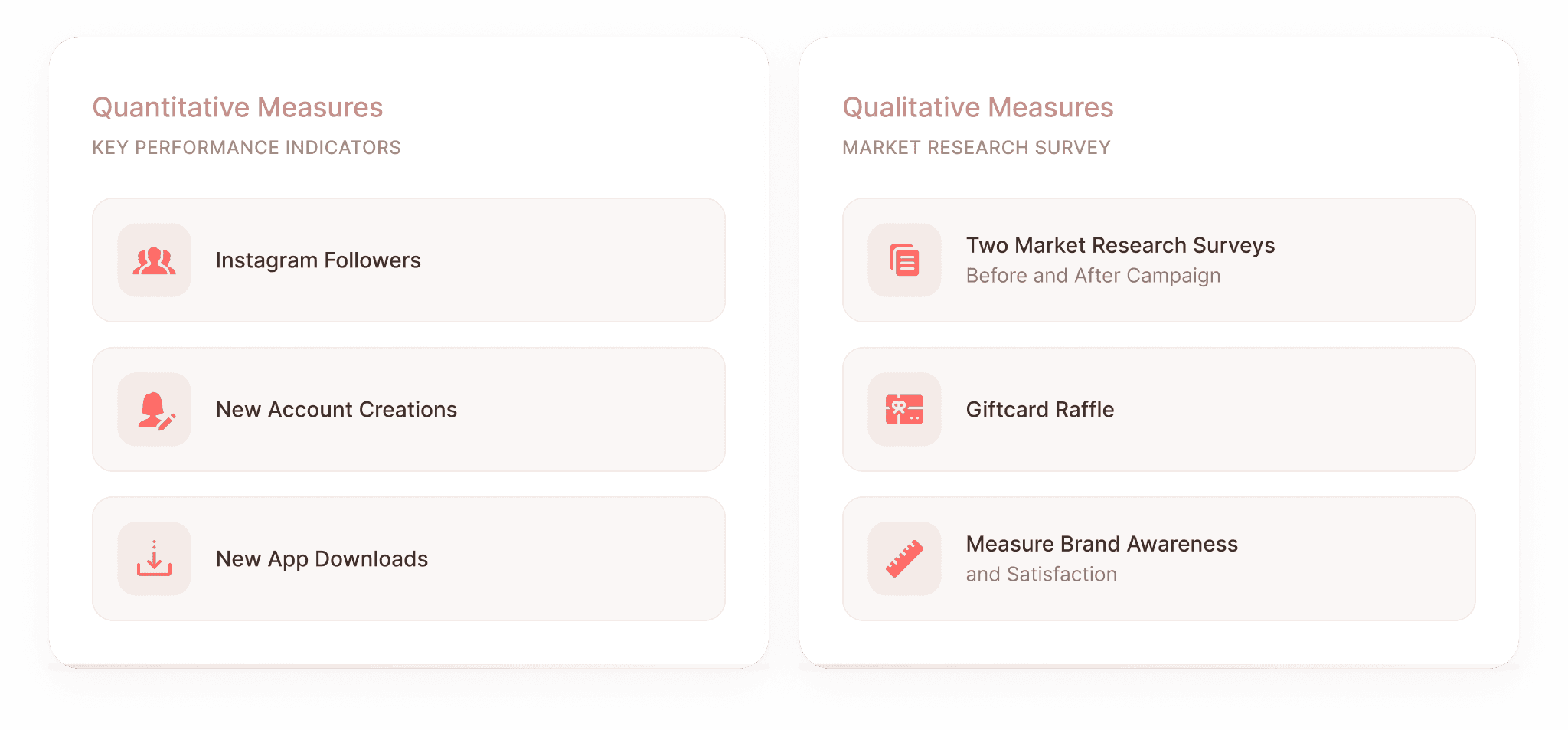
Measurement plan (installs, accounts created, awareness survey)
One primary campus segment with a sharp activation focus
We targeted full-time UCLA undergrads who want friends and events, with extra focus on first-years and transfer students who have fewer built-in connections.
What we're tracking and what success looks like
Metrics were structured to connect daily campaign actions to the north star acquisition outcome.
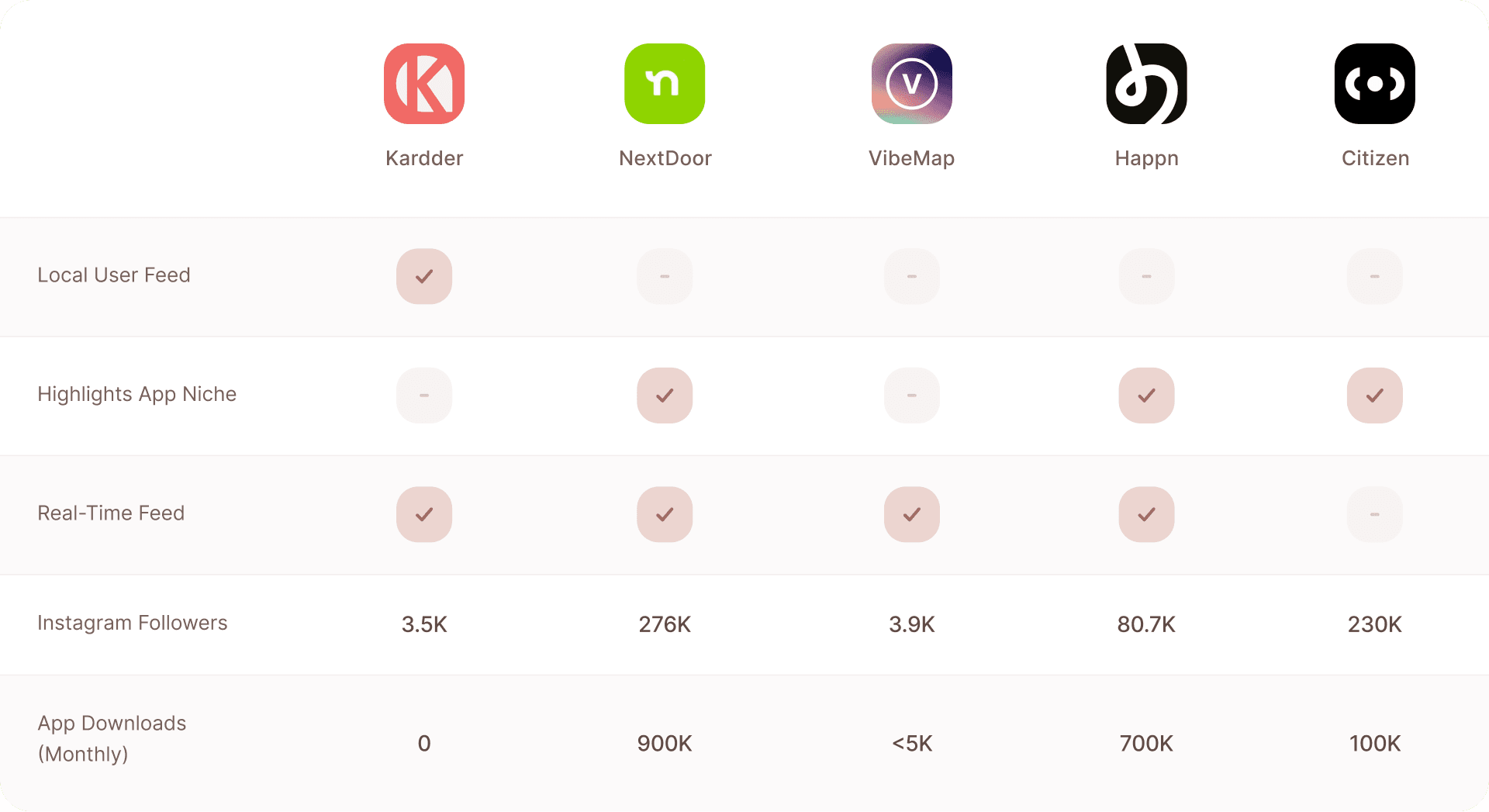
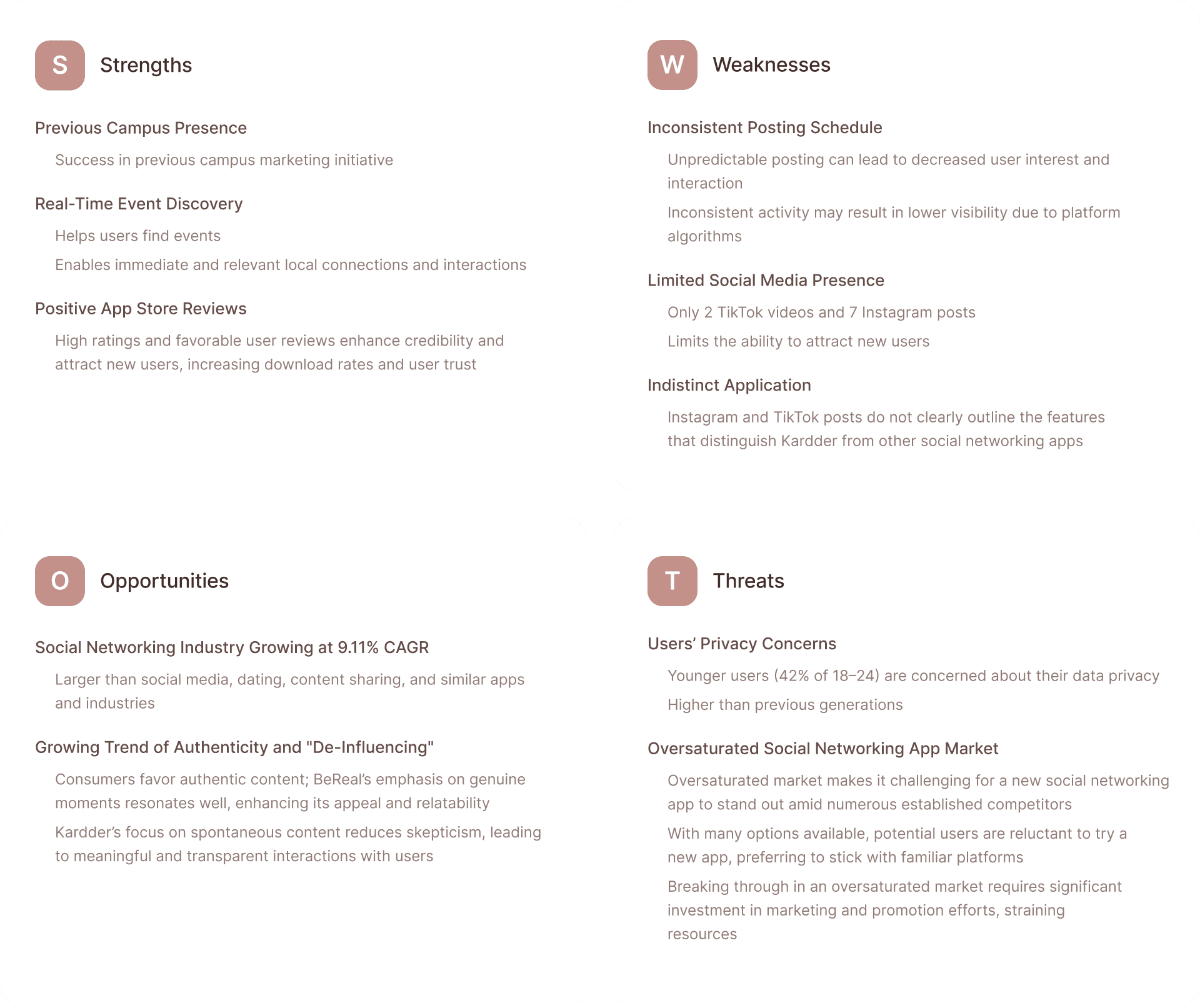
Kardder's edge is real but students needed a faster reason to try it
Competitor analysis and product data revealed where growth was stalling and what Kardder could actually win on campus.
Growth would stall if people did not quickly understand what Kardder is for and why it fits campus life. The plan fixed this by pairing clear positioning with repeated, in-person triggers to install and try the app at the exact moment students want to meet people and find plans.
Kardder's edge is real-time, proximity-based connection. 'Nearby' means nearby (GPS, Wi-Fi, Bluetooth proximity).
The market is crowded, so campus activation needs strong incentives and visible social proof
Kardder had 94,922 sessions and 122,581 chat messages. The main risk wasn't engagement. It was getting more of the right UCLA students to try it.
Kardder's Instagram had 3,545 followers and a 0.40% engagement rate. Apps that explain their main value in one line tend to win on followers and downloads.
Out-trust and out-activate the big platforms, not out-spend them
Rather than chasing paid acquisition or broad social campaigns, the strategy centered on what Kardder could actually win: high-intent campus moments where students already want to meet people and find plans.
Make the 'real life proximity' value obvious in the first 5 seconds
Use events as the hook, not ads
Build trust fast with clear boundaries and privacy framing
Borrow existing demand from high-traffic campus moments
If we drive installs through high-traffic campus moments and tie them to incentives, then installs and new accounts will rise because students already show 'meet people' intent during those moments.
If we grow Instagram with consistent positioning, then follower trust and download intent will increase because social proof compounds.
Why campus activations and not ads or influencers alone
Three options were on the table. The team was split on paid ads vs. campus activations. I built a CAC model in Google Sheets to make the sequencing case: the plan goal was campus adoption, and Kardder's advantage is proximity in the physical world.
Campus activations plus partnerships because the plan goal was campus adoption, and the product's advantage is proximity in the physical world. The CAC model showed campus activations at ~$1.37/install vs. $4-6 for paid social, which moved the founding team from a split decision to activation-first with paid as a retargeting layer. I prioritized tactics that forced a clean value exchange: install and follow in return for access, prizes, or a fun moment.
What was in and what was saved for later
Discovery: baseline metrics and message testing
Build: tracking plan and event ops checklist
Launch: campus activations and partnerships
Measure: installs, accounts created, awareness survey
A strategy document, CAC model, budget, and two operating tools built to ship
Wrote the plan as a single source of truth (strategy, tactics, flowcharts). Turned goals into a measurement plan tied to what to track and how.
Ops tools, rollout sequence, and risk mitigation
The handoff was designed so a small team could execute confidently with clear scripts, flowcharts, and a phase-by-phase rollout.
Launch at a high-traffic UCLA moment with a booth and prize wheel to drive installs
Stack partnerships (org events and Greek life) to create repeated install triggers
Run Instagram giveaways alongside activations to compound awareness
Simple scripts for booth staff and partners: how to pitch in one sentence. Two operating tools built: an event flowchart mapping dependencies (outreach, reserving, supplies, flyering) and a media flowchart mapping what to draft, post, and repost around each event. Both built so the team could run activations and attribute results without a PM present.
Week 0 booth activation (Meet the Hill): anchor install moment with prize incentive
Weeks 2-6: event partnerships and org collabs stacked for repeated exposure
Ongoing: creator content and Instagram giveaways to sustain social proof between events
Privacy concerns: lead with boundaries and clarity on how proximity works. Reinforce 'not a dating app' framing in all booth pitches, creator briefs, and social copy.
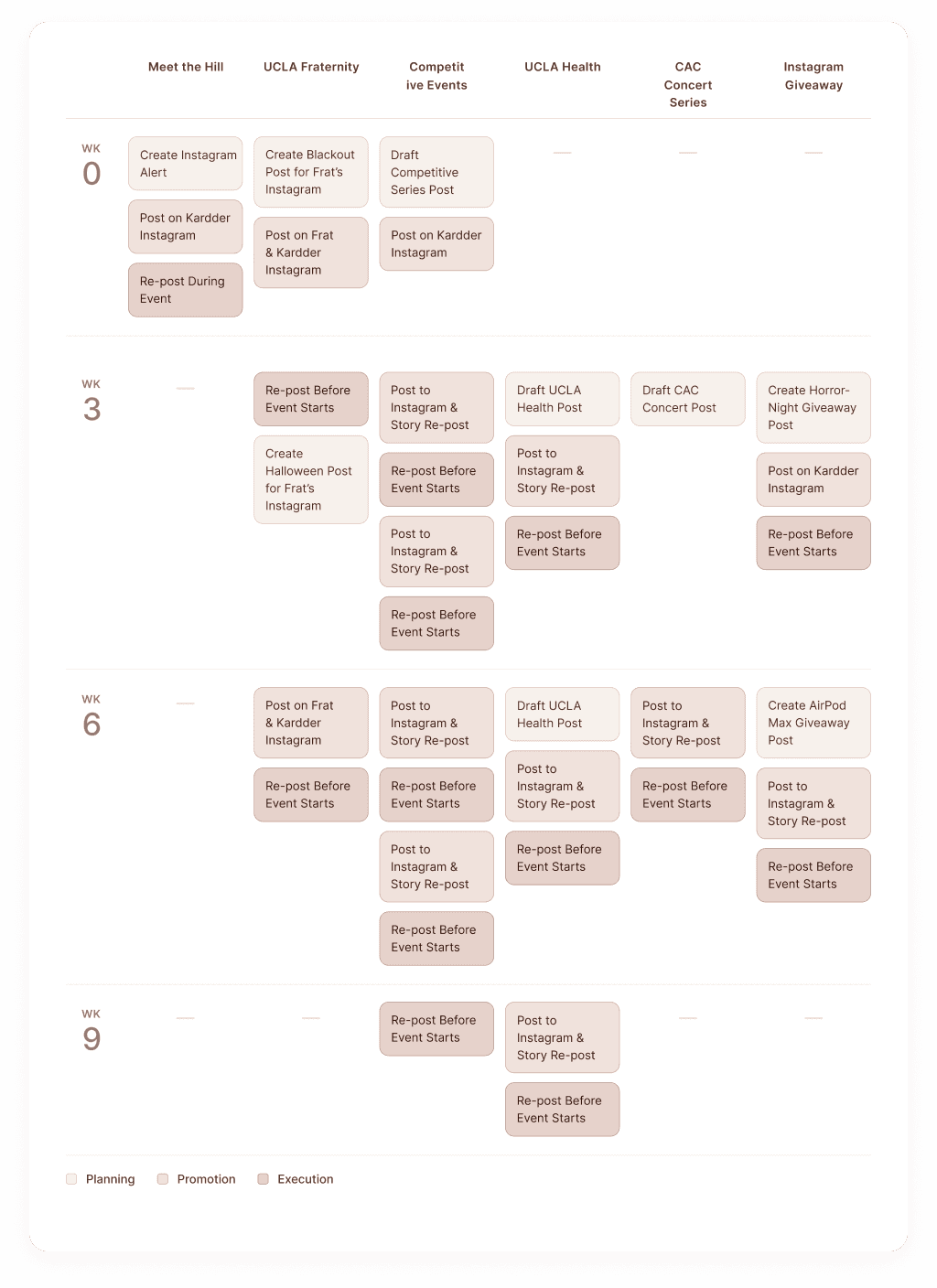
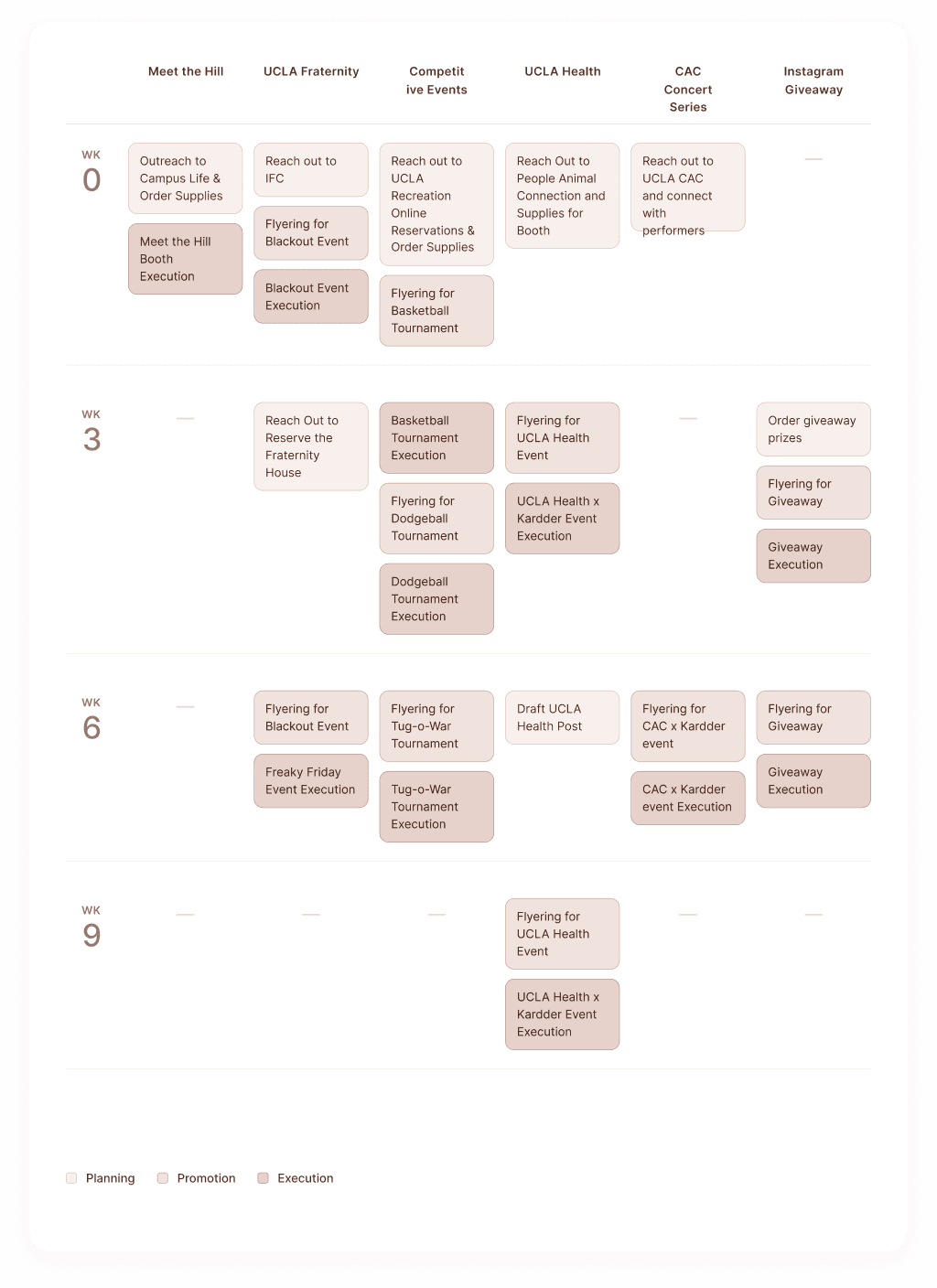
A $13,665 plan and measurement framework targeting campus adoption
Founders used this strategy to launch at UCLA. Every tactic was tied to a measurable outcome so the team could shift budget toward the highest-converting channel. GTM targets: 10K installs, 7.5K Instagram followers, 50% awareness lift over 3 months.
If users can't explain the product in one sentence, growth stalls
This project reinforced a simple PM rule: if users cannot explain the product in one sentence, growth stalls. That is why I anchored the plan on clear positioning, real-time social networking, truly nearby connections, and student co-creation. The CAC model was the pivot point. Before it, the founding team was split between paid ads and campus activations. After it, the path was clear. If I ran the next iteration, I would add tighter funnel instrumentation per event (QR scans to installs, installs to account creation) and run message tests for the 'not a dating app' framing versus 'missed connections' framing. That would let the team shift budget toward the highest-converting channel faster. I would also add lightweight retention loops tied to events (follow, RSVP, invite a friend) so installs turn into repeat use.
The best GTM plans don't just generate installs. They create the exact moment users understand why they needed the product.
More Case Studies
Let's connect and build something together.
Open to product, GTM, operations, and design opportunities.