Website Conversion and App Flow Standardization for an Alumni Networking Platform
Diagnosed a funnel drop-off using behavioral analytics, built a prioritization framework to align the PM and CEO, and shipped a phased fix that moved four metrics in four weeks.
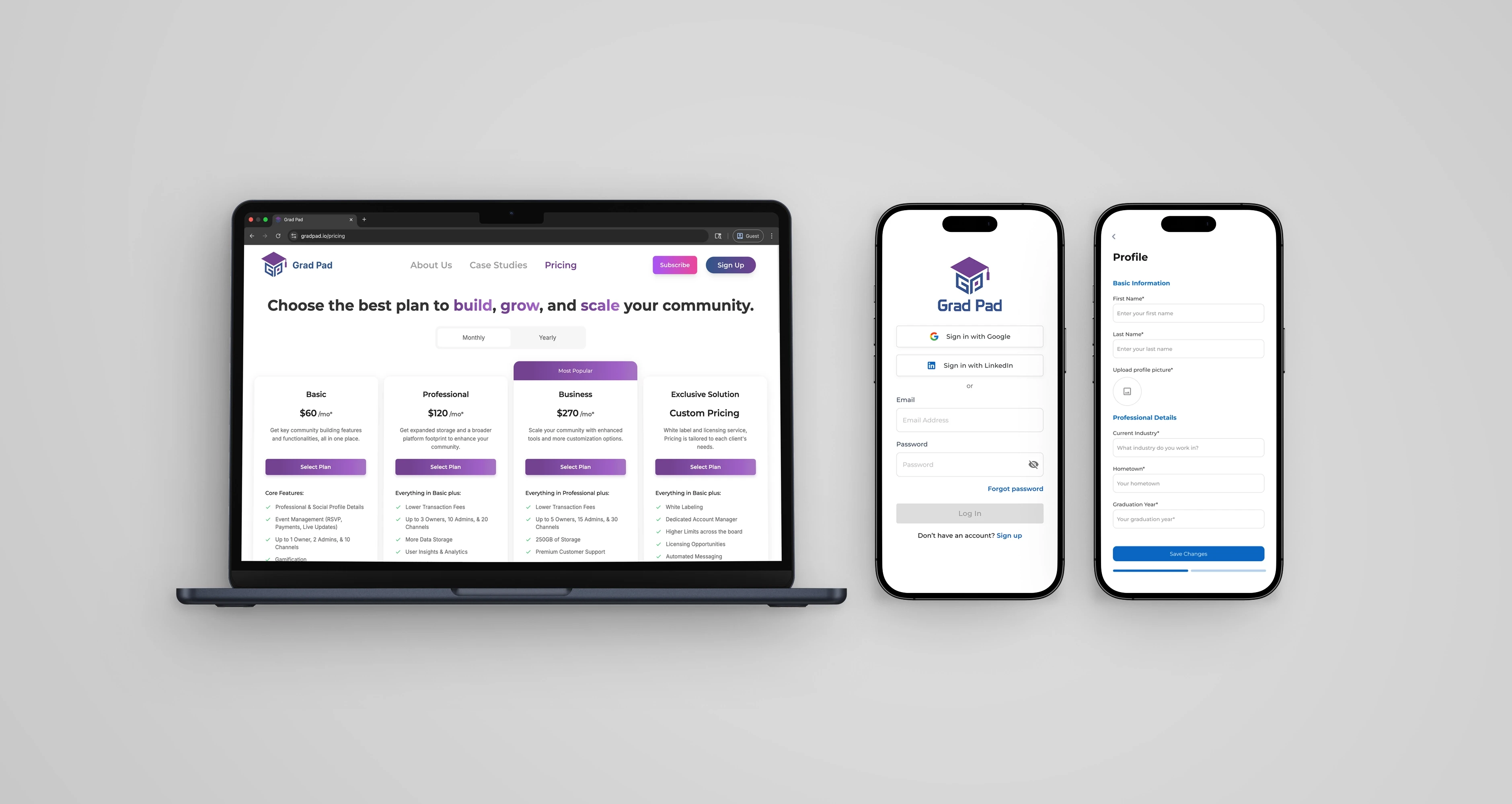
Making the path from awareness to activation clear
GradPad is an alumni networking platform. The marketing site explains the product and pushes visitors toward sign-up or plan selection, while the app needs a clear and consistent setup flow so new users can complete onboarding and start using the network. I used Microsoft Clarity to run a directional funnel audit, identify where users were dropping before pricing, and surface interaction issues that were collapsing intent on the highest-value page. I then built a prioritization framework to align the PM and CEO on a phased fix instead of a full redesign.
A homepage that explained everything except why to sign up
GradPad's homepage was technically complete but functionally confusing. The value proposition was buried, the pricing section was hard to find, and the sign-up flow had friction points that caused early abandonment. The PM and CEO had different views on what to fix first. Without data, the conversation stayed subjective. I needed a way to make the prioritization objective.
"Users were arriving, not understanding the value, and leaving before they ever reached the sign-up page."
Two distinct users with different activation paths
Clarity made the drop-off visible and gave the team a prioritization case
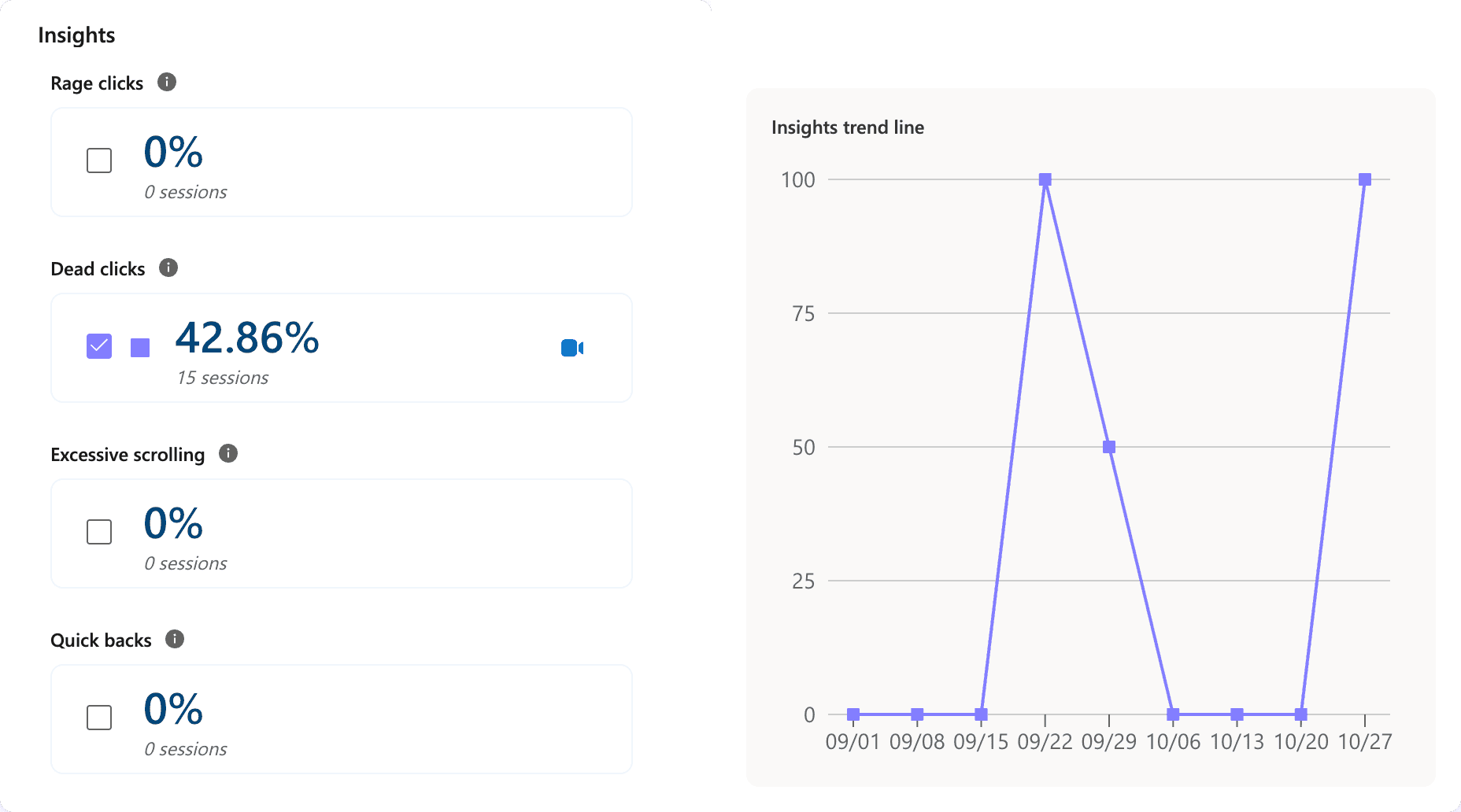
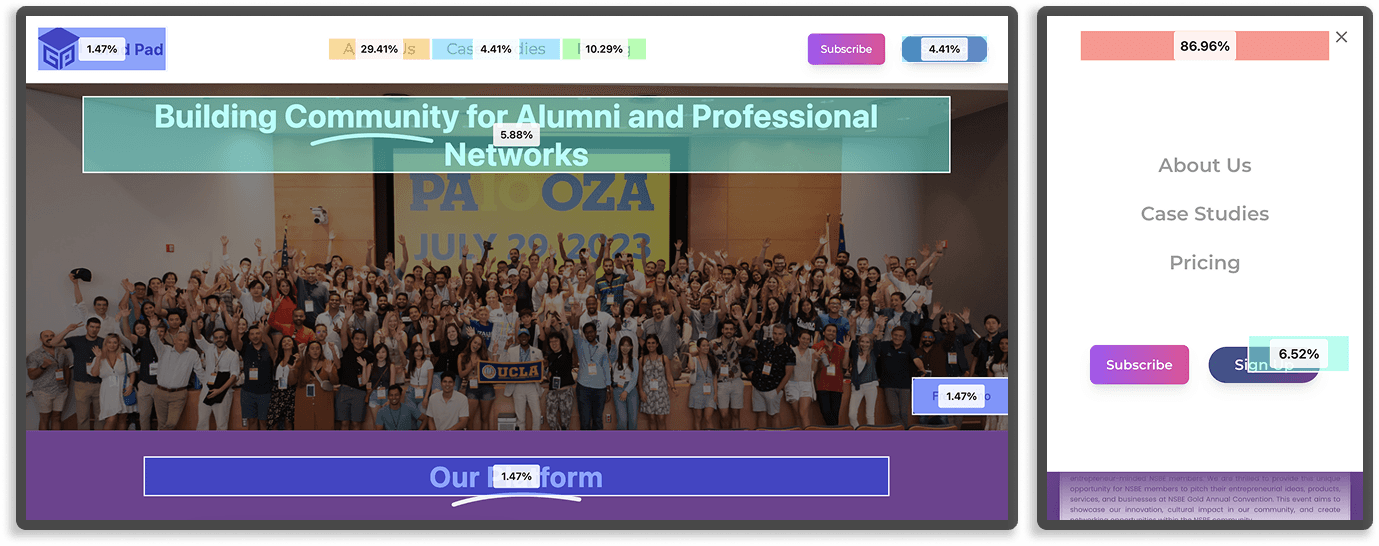
I used Microsoft Clarity to run a directional funnel audit across 280 sessions and found that the conversion chain broke at two points. Most visitors never reached pricing, and the users who did often hit dead clicks on the pricing page at the highest-intent moment. That gave me a clearer case for a phased fix than a broad redesign.
Only 12.5% of sessions reached pricing, which meant most visitors never got to the plan decision point
The pricing page had a 42.9% dead-click rate, showing strong intent but poor affordance
Users clicked elements that looked interactive but were not wired as actions
The core issue was not lack of interest, but a broken path from proof to pricing
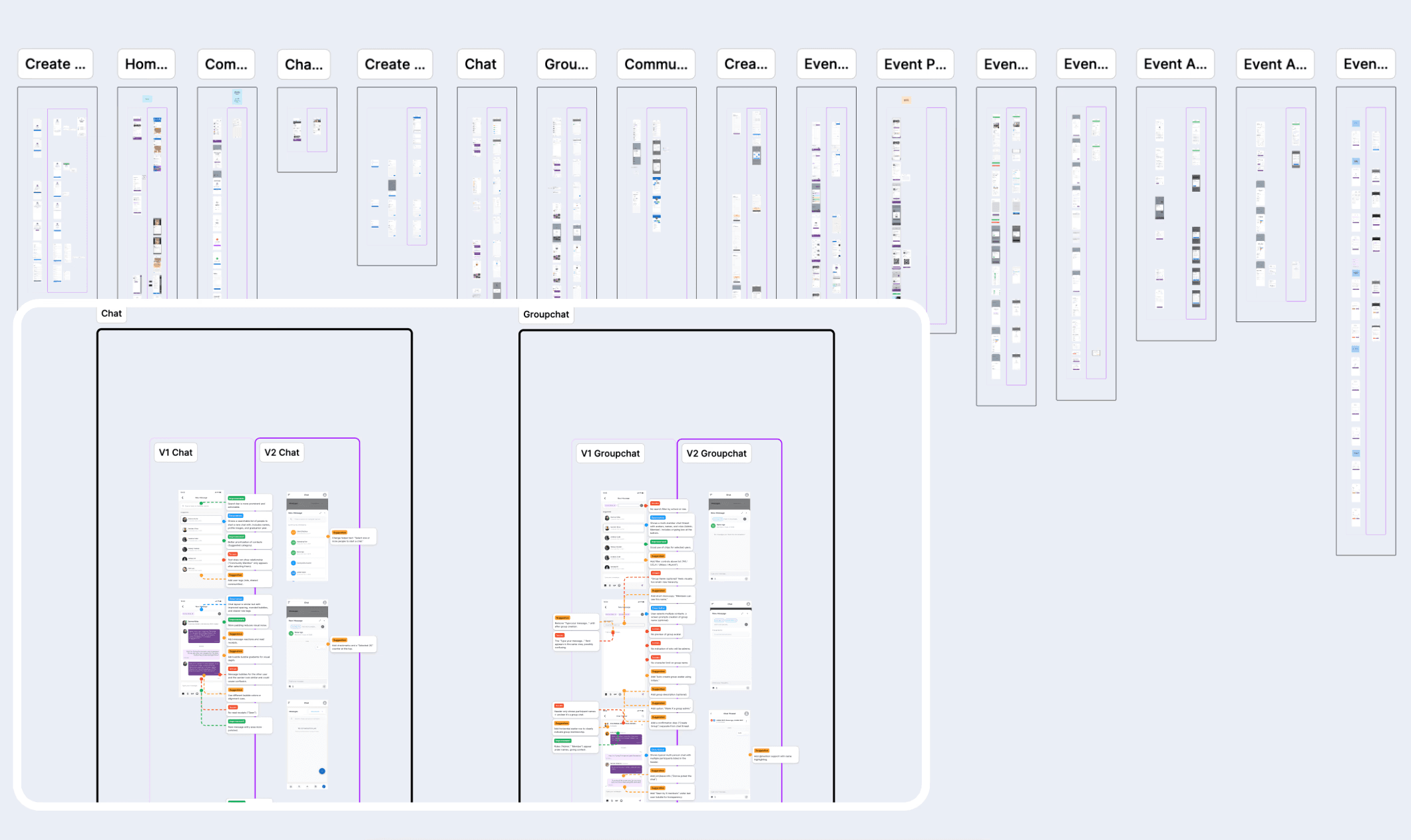
The app also showed consistency gaps across onboarding and event-related flows that added cognitive load
Fix reach first, then remove friction at the highest-intent step
Rather than redesigning the full product, I recommended a phased approach. First, improve the path from learning pages to pricing. Second, fix interaction issues on pricing so users who showed intent could actually act. This sequencing made the work faster to ship and easier to measure.
Use behavioral data as a prioritization case, not just a design critique
Fix reach before friction when most users never reach the key page
Prioritize interventions that can ship quickly and produce clean signal
If we add clearer paths from proof-oriented pages to pricing, more sessions will reach the plan decision point.
If we fix affordance failures on pricing, dead clicks will drop and plan CTA clicks will rise.
If we sequence the fix as phased improvements instead of a full redesign, the team can ship faster and attribute performance more clearly.
Turning a redesign debate into a sequencing decision
The team initially leaned toward a broader redesign. I built a weighted effort-versus-impact framework to show that a phased fix could ship faster, isolate signal more cleanly, and address the highest-value drop-off points first.
Start with the two highest-impact, lowest-effort fixes. Ship them independently so we can attribute the metric movement cleanly. Defer the full redesign until we have signal on whether structural fixes are sufficient.
Directional audit, targeted fixes, then broader flow recommendations
The work combined a directional funnel audit, targeted website fixes, and a broader audit of app consistency issues. The pricing-page work shipped first because it was closest to revenue, while the larger app findings informed the roadmap that followed.
Four metrics moved in four weeks
The phased fix improved both reach and action. More visitors made it to pricing, and the users who got there encountered fewer dead ends. The strongest outcome was not just metric lift, but a clearer, faster path from proof to plan selection. PM prioritized 3 of 8 backlog items from the analysis and built them in the following sprint cycle.
If I had another sprint
The structural fixes worked. The next question is whether they compound and what the ceiling is.
The framework mattered because it changed the conversation
The most valuable thing I built was not just the pricing fix itself, but the prioritization case that aligned the PM and CEO on what to do first. Before that, the discussion was leaning toward a broader redesign. After the audit and matrix, the team had a clearer sequence and a faster path to signal. I also learned that business impact should shape sequencing. I initially saw onboarding as the biggest problem area in the app audit, but the PM redirected attention to pricing because it sat closer to revenue. In retrospect, the data supported that call. If I did this again, I would instrument downstream conversion earlier so the case study could connect the shipped fixes more directly to paid-plan outcomes.
Fix reach first, then friction at the highest-intent step.
More Case Studies
Let's connect and build something together.
Open to product, GTM, operations, and design opportunities.